
A Little Look at What’s New Around Chattanooga Music Scene
Chattanooga’s music scene was here long before any website tried to describe it. It was not made from web pages, calendars, or advertisements; it was made from people.
It is the musician carrying an amp through a back door. It is the person working the soundboard, the photographer catching a moment, the venue owner taking a chance on a new act, and the fan who shows up on a rainy Tuesday night because live music matters to them.
That human energy is what Chattanooga Music Scene is being built to serve. The website has changed quite a bit, but the purpose behind those changes is simple: help people find one another, help local events be seen, remember the places that shaped us, and make it easier to feel connected to what is happening here.
The first place that idea becomes visible is on The Scene itself.
The Scene Has a New Look
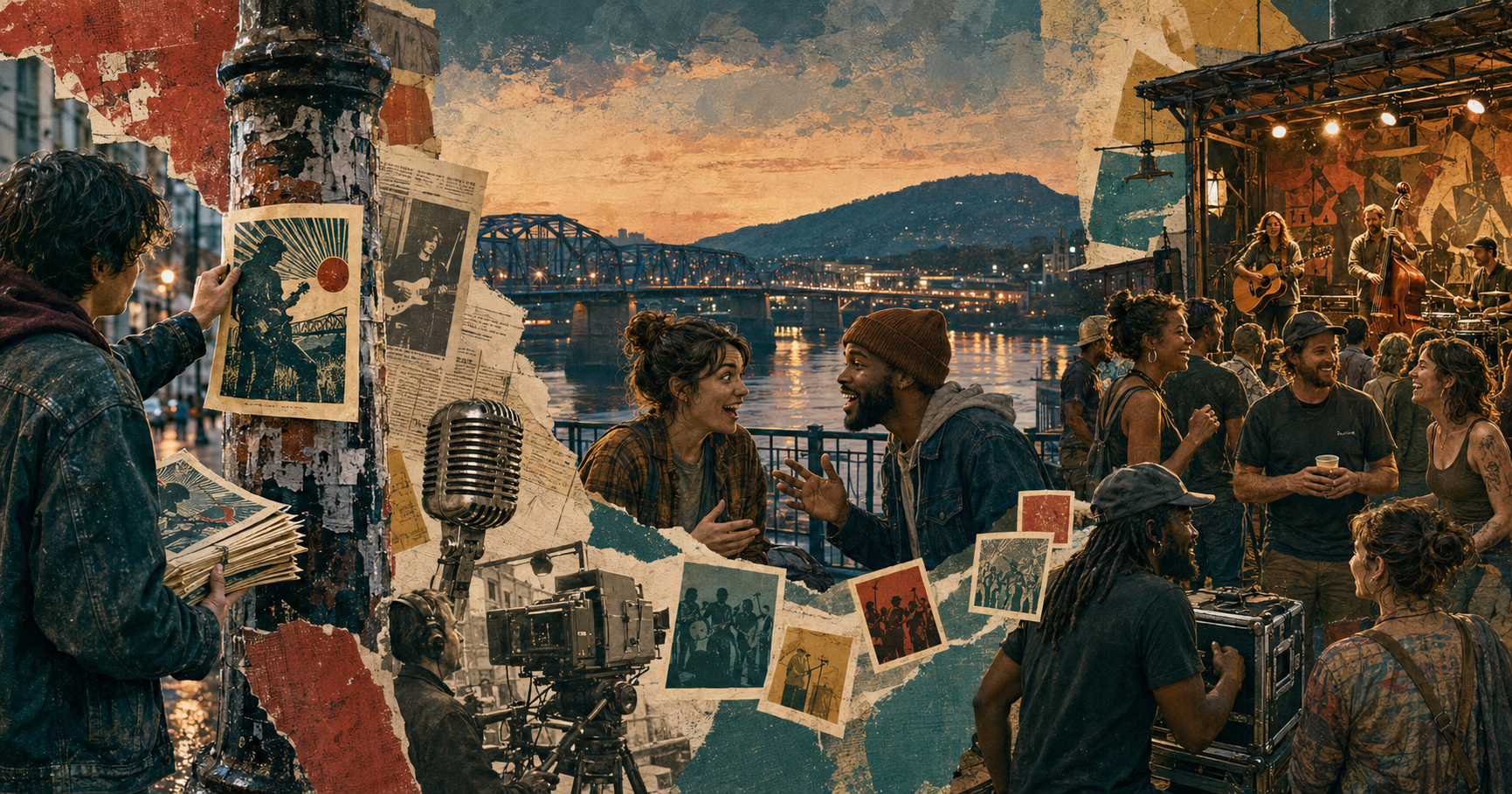
The main Scene page has been moving away from the neat, ordinary boxes found on so many websites. Chattanooga music has never fit inside a tidy little box, so we did not want its central page to feel that way either.
The new look borrows from old concert posters, handmade collage, painted walls, historic photographs, familiar landmarks, and music rooms that may be gone but have never really left our memories. It is intentionally a little scattered, a little imperfect, and full of different eras living beside one another.
That is closer to the truth of a music scene. It is yesterday and tonight occupying the same room. It is an old story leading someone toward a new show, and a new artist becoming part of the history we will talk about years from now.
Once the page began to reflect that feeling, the next challenge was making sure the rest of the website felt like part of the same room.
Making the Whole Website Feel Connected
We have been working to make Chattanooga Music Scene feel like one community instead of several unrelated stops.
You might arrive looking for a concert and end up reading about a room where people gathered decades ago. You might be searching for a venue and discover a local artist. You might visit the Marketplace looking for a used guitar and find a musician who needs someone to play with.
Those things belong together because that is how a real scene works. The people, places, stories, shows, instruments, and opportunities constantly cross paths. The website should make those crossings easier, not separate everything into corners.
The Marketplace is part of that connection. It is not meant to feel like a separate, generic store. It is being shaped around the real needs of local musicians and artists: gear, gigs, studios, lessons, services, collaborators, and other opportunities that keep creative work moving.
Of course, connection begins with knowing where people can gather. That brings us to one of the oldest challenges in local music: simply getting the word out.
Bringing More Local Events Into One Place

There was a time when letting people know about a show meant doing almost everything by hand.
Musicians, venue owners, and promoters had to design a poster, pay to have copies printed, and then spend hours carrying them around town. They went up on lamp posts, record-store windows, restaurant walls, college bulletin boards, and anywhere else someone might stop long enough to notice.
If there was enough money, a show might get an advertisement in a newspaper or local magazine. That meant paying for limited space and hoping the right people happened to read that particular issue. There could also be the cost of photographs, artwork, printing, gasoline, and the time it took to drive from place to place asking permission to hang another flyer.
Radio and television could carry the message farther, but they came with barriers of their own. Buying commercial airtime could be expensive, especially for a small venue or an independent local band. Getting an interview, a calendar mention, or a short appearance often depended on limited programming space and whether someone at the station decided the event was large enough to cover.
When local radio or television did shine a light on a show, it could make an enormous difference. But not everyone had the money, contacts, or opportunity to get that microphone or camera pointed their way.
And then there was word of mouth—one person telling another at a record shop, a club, a rehearsal, at work, at school, or over the telephone. Word of mouth could be powerful because it carried the excitement of a personal recommendation. But it could only travel as far and as fast as people carried it. Plenty of good shows came and went without reaching everyone who would have wanted to be there.
Today we have more ways to communicate, yet the information is still scattered. A concert may appear on a venue calendar, a ticket page, an artist announcement, a festival schedule, a social post, or a digital flyer. People can still miss the one show they would have loved because they did not know where to look.
That is why bringing more local events into one dependable place matters. It gives artists and venues another way to reach people without relying entirely on advertising budgets, printed posters, broadcasting contacts, or chance encounters. It gives audiences a place to discover what is happening without searching all over town—or all over the internet.
A good calendar is not simply a list of dates. It is a modern form of that poster on the lamp post: an invitation to come inside. Every accurate listing can mean another person in the room, another ticket sold, another artist discovered, or another memory made.
Bringing all of that information together takes more than one pair of hands, which is where a little quiet assistance becomes valuable.
Technology That Quietly Lends a Hand
There is some clever technology helping in the background, but it is not meant to be the star of the show.
Its job is to take on some of the repetitive searching and organizing: noticing event details, bringing dates and places together, recognizing when a schedule changes, and helping us avoid adding the same thing twice.
The best technology often feels almost invisible. It gives people back a little time. It helps a small team keep up with a large and constantly changing music community. Most importantly, it allows more attention to remain where it belongs—on the people making the music and the people coming out to hear it.
That quiet help is useful only when the information it produces remains clear and respectful of the real places behind every listing.
Keeping the Calendar Clear and the Places Recognizable
We have been cleaning up repeated listings and making venue information more consistent. That may sound like a small housekeeping job, but it makes a real difference.
Nobody wants to open a calendar and see the same concert two or three times. It becomes harder to know which listing is accurate, and the crowding can push other events out of view. A cleaner calendar helps every show receive a fairer chance to be noticed.
The same care applies to venues. A place should not become several different locations simply because its name or address was written a little differently somewhere else.
A venue is more than an address. It is a room people remember. It may be where someone saw their first local band, played their first show, met an old friend, or heard a song that stayed with them. We want events to lead people to the right place and help each venue build a history of its own on the website.
Tools can help organize those details, but knowing what truly belongs still requires something no machine possesses: a relationship with the community.
People Are Still at the Heart of It
No amount of technology knows Chattanooga the way the people living and creating here do.
That is why artists, musicians, venues, promoters, and community members have a way to share events and locations. It is also why information can be reviewed before it becomes public. The goal is not to make the website feel automated. The goal is to let useful tools support human judgment and local knowledge.
If a date looks wrong, a venue has changed, or a local event has not appeared anywhere else yet, a person still matters. In fact, that person may be the most important part of the entire process.
That balance—helpful technology guided by people who care—is the foundation for everything still ahead.
There Is More to Come
Some improvements are easy to see. Others are small changes that become noticeable only when the website feels a little easier to use, the calendar is a little more dependable, or someone discovers something they would otherwise have missed.
There is still work ahead, and there probably always will be. A living music scene never stands still. New artists arrive. Old venues close. New rooms open. Stories are remembered, forgotten, and found again.
Chattanooga Music Scene is growing alongside all of that. Not to define the scene or control it, but to give it another place to gather, remember, discover, and belong.
We began with a simple truth: a music scene is made from people. Every improvement across the website comes back to that truth.
This website is not really about technology. It is about making sure Chattanooga’s music—and the people who carry it—have a place to be seen, heard, remembered, and welcomed.