
Behind the Rhinestones: What Dolly Parton Really Built
Dolly Parton sold the world an unforgettable character. Behind it stood a songwriter protecting her copyrights, a businesswoman choosing powerful partners and an East Tennessee native who converted celebrity into lasting community infrastructure. Her legacy rests on the system behind that image: songwriting ownership, carefully chosen partnerships, regional business and philanthropy built to endure.
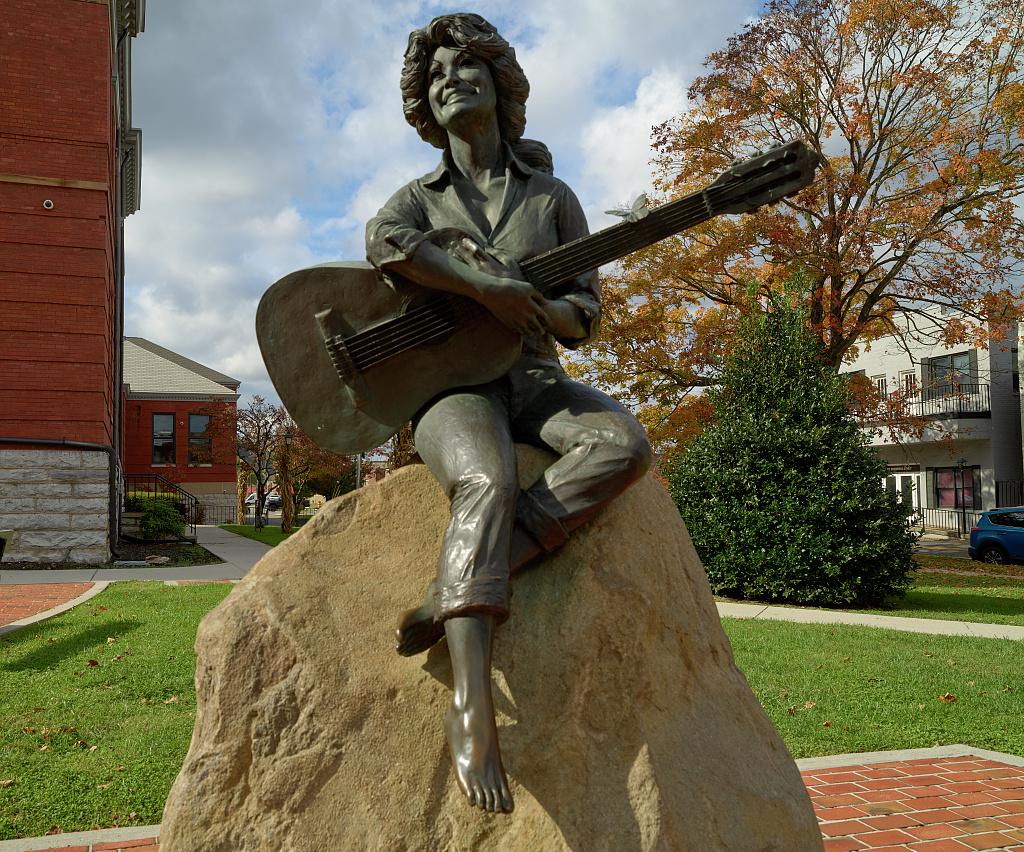
Dolly Parton, the East Tennessee songwriter whose family announced her death Tuesday at age 80, spent nearly six decades making an enormous amount of work look effortless. The wigs, rhinestones, jokes and exaggerated silhouette were unforgettable—but they were never the whole enterprise.
Under the public character was a disciplined structure: thousands of songs, hard decisions about ownership, carefully chosen business partnerships and charitable programs designed to continue without requiring her physical presence. The most revealing story is not that Dolly Parton became famous. It is how she converted fame into leverage—and then converted leverage into institutions.
The public character was deliberate
Parton understood spectacle before “personal brand” became an industry phrase. Her look invited caricature, and she often made the joke first. That disarmed critics while keeping control of the room. The image was bright and accessible; the work behind it was exacting.
The Country Music Hall of Fame describes a career built on ignoring naysayers and crossing boundaries that the Nashville establishment treated as fixed. She resisted advice that her clothes would obscure her talent. Later, when she worked with pop producer Gary Klein on Here You Come Again, some country insiders accused her of abandoning the genre. The album became her first million-seller and opened another market without erasing the voice that came from Locust Ridge.
That tension was central to her power. She could appear harmless while making decisions that were anything but passive. The persona did not conceal a lack of seriousness; it protected her freedom to be serious on her own terms.
Dolly Parton’s songwriting became leverage
Parton wrote from childhood and never treated songwriting as a decorative part of stardom. Reuters reported that she wrote an estimated 3,000 songs. Long before film roles, theme parks or philanthropic campaigns, songs were the asset that gave her bargaining power.
Her 1974 hit “I Will Always Love You” was written as a farewell to Porter Wagoner when she left his television show and professional partnership. The song became a country No. 1 for Parton and, in Whitney Houston’s 1992 recording, a global pop phenomenon. The value did not come only from performance. It came from having written the song and retaining the rights that allowed the work to keep earning across generations.
That distinction matters in a music economy that frequently rewards visibility while separating artists from ownership. Parton’s enduring fortune and independence were tied to songs she controlled—not simply to applause, ticket sales or a famous face. Her most glamorous business lesson was also the least glamorous: write the work, know what it is worth and do not surrender the engine.
How Dolly Parton turned independence into infrastructure
Leaving Wagoner did not mean working alone. Parton repeatedly chose partners, but she did so from a stronger position. In 1986 she joined the Herschend family in transforming Silver Dollar City, Tennessee, into Dollywood. The partnership connected her name to an existing attractions operation while giving East Tennessee a destination built around regional music, craft and memory.
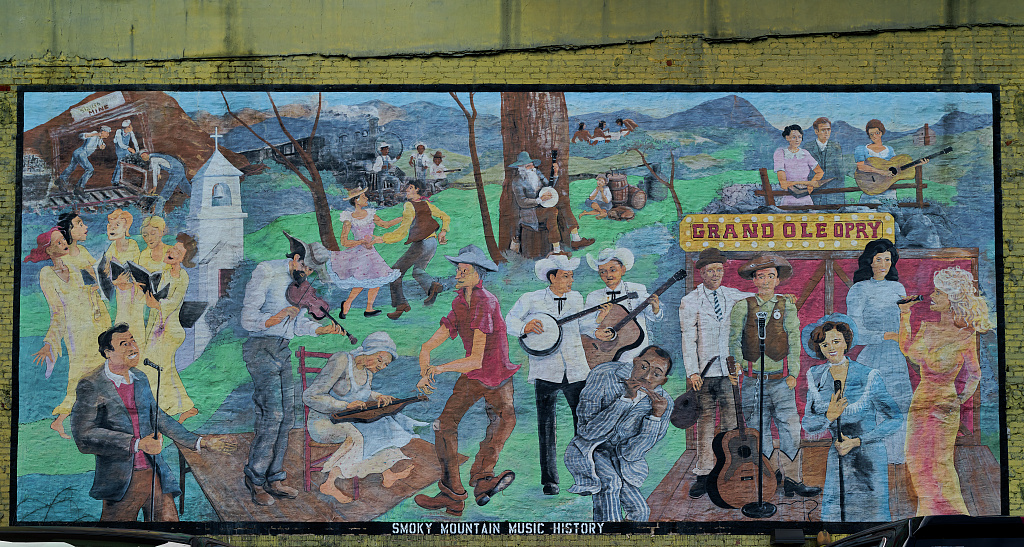
Dollywood was more than a celebrity-branded attraction. It became a durable economic and cultural platform in the Smokies: a place where Appalachian performers, craftspeople and stories could be staged for a mass audience, even as that presentation turned regional identity into a commercial product. The tension is real. So is the employment, tourism and institutional presence the enterprise created in her home region.
Dolly Parton’s philanthropy, built like a system
Parton’s best-known philanthropy followed the same logic: build a repeatable mechanism, not a one-day gesture. She founded the Imagination Library in Sevier County in 1995, inspired by her father’s inability to read and write. The first order sent roughly 1,700 books. The program now mails more than three million books each month to children around the world, free to participating families and supported through a network of local partners.
After the 2016 Smoky Mountain wildfires, the Dollywood Foundation created the My People Fund within 48 hours. It paid $1,000 a month for six months to families whose primary residences were destroyed or made uninhabitable, then increased the final distribution to $5,000 per family. That response was immediate, local and administratively concrete.
In 2020, Parton gave $1 million to Vanderbilt University Medical Center for COVID-19 research. Vanderbilt later said the fund supported critical early work connected to the Moderna vaccine’s first trial. She followed with another $1 million gift for pediatric infectious-disease research in 2022. Celebrity made the gifts visible; institutional partners made them useful.
What the rhinestones concealed—and revealed
The easy myth is that Dolly Parton stayed universally loved because she avoided conflict. The more accurate reading is that she made complexity feel welcoming. Her songs addressed poverty, class humiliation, desire, work, departure and female self-determination without turning those experiences into lectures. Her humor lowered defenses. Her authorship carried the argument.
Her version of Appalachia could be polished into nostalgia and sold back to visitors. That deserves scrutiny, especially in a region where real poverty can disappear behind a marketable mountain image. Yet Parton did not merely extract a story from East Tennessee and leave. She repeatedly routed money, employment, books, disaster aid and cultural attention back into the place that produced her.
The lesson for Chattanooga’s music scene
Chattanooga is not Sevierville, and a local scene should never be reduced to somebody else’s legend. But Parton’s career offers a practical regional lesson for Chattanooga’s music scene. A music culture survives when artists own work, when stages connect to institutions, when history is treated as living material and when success circulates back through the community.
The strongest local scenes are not calendars alone. They are ecosystems: writers, musicians, photographers, bookers, venues, archives, educators, engineers, independent businesses and audiences who recognize their mutual dependence. Parton understood that a song could become a catalog, a catalog could become leverage, leverage could become a business and a business could support public good.
Her death closes a life, not the machinery she set in motion. The songs will continue to travel. Dollywood will continue to employ and entertain. Books will continue arriving in children’s mailboxes. The test of her legacy is not whether the public remembers the hair, the dresses or even the punch lines. It is whether the structures remain useful after the star is gone.
The rhinestones were real. So was the strategy.
Sources
Reuters, “Dolly Parton, queen of country music, dies at 80,” Aug. 25, 2026 — https://www.reuters.com/lifestyle/dolly-parton-has-died-family-says-2026-08-25/
Country Music Hall of Fame and Museum, “Dolly Parton” — https://countrymusichalloffame.org/hall-of-fame/dolly-parton
Dollywood, “About Us” — https://www.dollywood.com/about-us
Dolly Parton’s Imagination Library, “United States” and program history — https://imaginationlibrary.com/usa/
Vanderbilt Health News, Dolly Parton COVID-19 and pediatric infectious-disease research gifts — https://news.vumc.org/2020/11/23/is-it-true-that-work-on-a-covid-19-vaccine-at-vanderbilt-university-medical-center-was-funded-by-dolly-parton/
The Dollywood Foundation, My People Fund final distribution — https://dollyparton.com/life-and-career/dollys-my-people-fund-finishes-smokies-strong
Library of Congress, Carol M. Highsmith Archive, Dolly Parton statue and Smoky Mountain Music History mural records — https://www.loc.gov/pictures/item/2021756536/ and https://www.loc.gov/pictures/item/2021756626/
U.S. Copyright Office, “Sound Recordings Can Comprise Two Separate Works” — https://www.copyright.gov/history/copyright-exhibit/artifacts/